
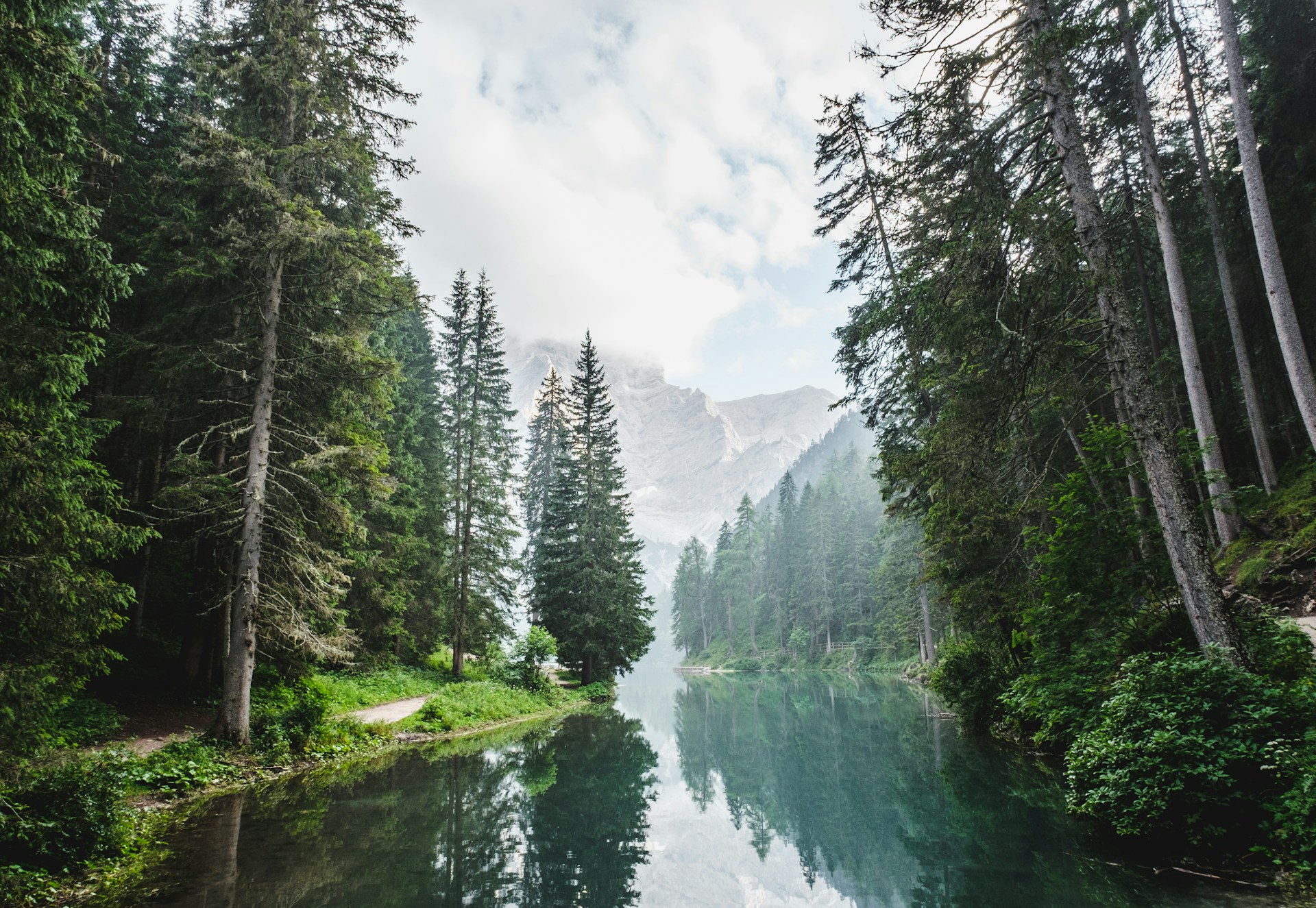
At first glance, the forest appears timeless.
Towering canopies stretch endlessly across the horizon, their emerald crowns swallowing sunlight before it can reach the jungle floor. Moist air hangs heavy between colossal trunks older than entire civilizations, while distant thunder rumbles through the basin like the heartbeat of the Earth itself.
But this rainforest is not merely alive. It is under constant attack from the sky. In one remote section of Central Africa’s Congo Basin, researchers have identified one of the most lightning-struck forests on the planet. During storm season, the skies erupt almost daily with violent electrical storms powerful enough to split ancient trees in half, ignite sudden fires, and permanently alter the structure of the ecosystem below.
Towering species with dense, moisture-rich bark appear capable of withstanding repeated lightning strikes, while neighboring trees collapse after a single direct hit. Over decades, this invisible war has slowly shaped the forest itself, favoring species that can endure the electrical violence raining down from above.
Researchers believe lightning may be acting as a natural evolutionary filter.
“Storms are selecting winners and losers,” explained ecologist Dr. Alain Mbemba, whose team has spent years monitoring storm activity in the region. “What we are witnessing is not just weather. It is a force actively sculpting the rainforest.”
Using drone-mounted thermal cameras and atmospheric sensors, scientists tracked thousands of strikes over a three-year period. Many impacts released temperatures hotter than the surface of the Sun for a fraction of a second, vaporizing moisture inside tree trunks and sending shockwaves through the surrounding vegetation.
The aftermath is immediate.
Branches explode outward. Vines blacken overnight. Entire sections of the canopy collapse, allowing sudden shafts of sunlight to pierce the darkness below. Within days, insects swarm the damaged wood while fungi and fast-growing plants rush to reclaim the opening.
Death, here, becomes opportunity.
And strangely, lightning may also help preserve biodiversity.
By knocking down dominant trees, storms create pockets of light where younger species can flourish. Without these violent interruptions, researchers say some sections of rainforest could become biologically stagnant, reducing the diversity that makes tropical ecosystems so resilient.
But the balance is changing.
Climate scientists warn that rising global temperatures are increasing atmospheric instability across Central Africa. More heat means more powerful storms, and more powerful storms mean more lightning.
Some models predict that strike frequency in parts of the Congo could rise dramatically over the next century.
For the forest, that could mean transformation on an unprecedented scale.
Species adapted to occasional storms may struggle against constant bombardment. Ancient giants that once survived for centuries could vanish within decades, replaced by faster-growing vegetation better suited to a harsher, drier climate.
And yet, amid the destruction, the rainforest continues to endure.
Each storm leaves scars across the canopy, but by morning, life resumes. Birds return to shattered branches. Insects hum through the humid air. Rain washes ash into the soil where new growth begins almost immediately.
In the Congo Basin, lightning is not simply a force of destruction.
It is part of the forest’s language — a violent conversation between sky and Earth that has been unfolding for millions of years.
Discussion
0 Comments
No approved comments yet. Start the conversation.